
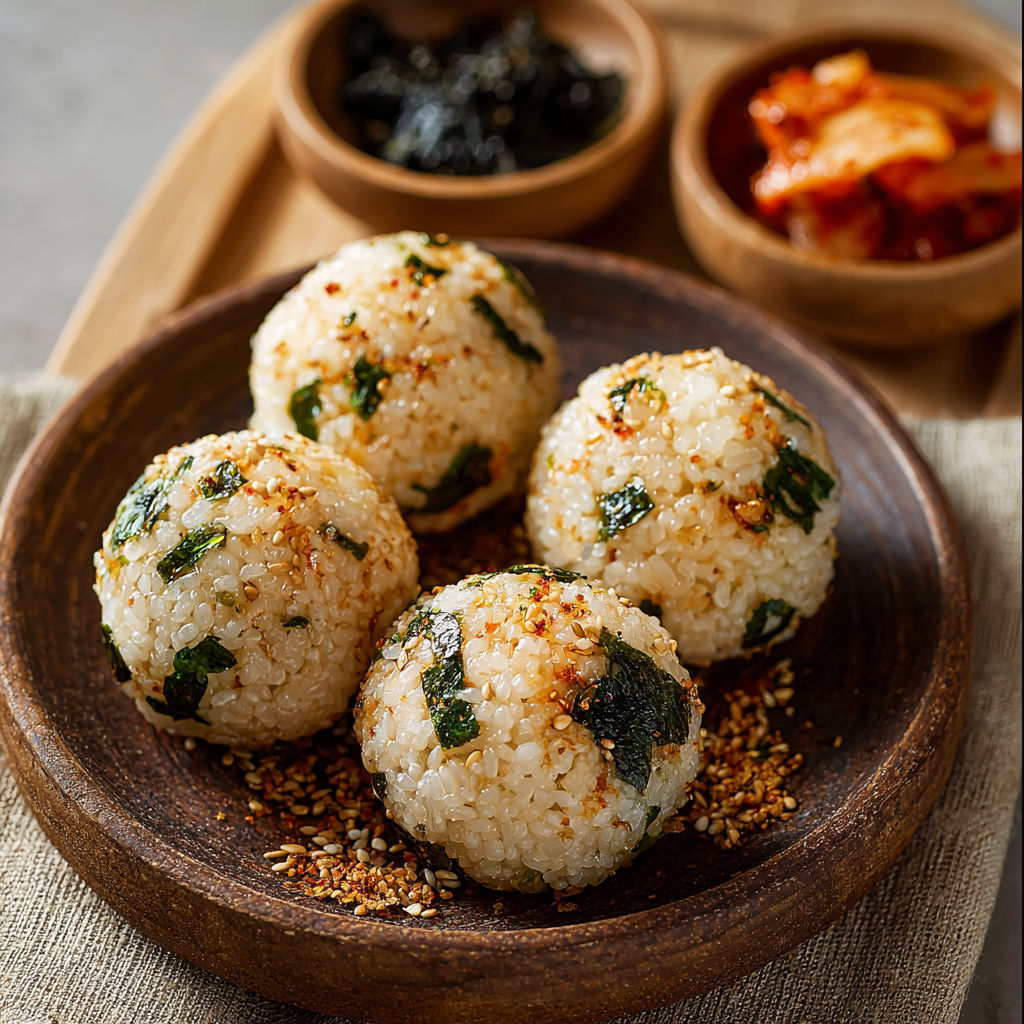
 Pin
Pin
These Korean rice balls, known as Jumeokbap, are a perfect grab-and-go snack packed with bold flavors. They blend the soft chewiness of short-grain rice with the spicy kick of gochujang, the tangy crunch of kimchi, and the nutty aroma of sesame oil. Whether you need a quick lunch, a picnic treat, or something satisfying between meals, these rice balls hit all the right notes.
I first made these during a busy week and was surprised how quick and flavorful they were. Now they’re a regular on my snack rotation and crowd pleaser whenever friends drop by.
Gather Your Ingredients
- Two cups cooked short-grain rice: for that sticky texture that holds the balls together well
- One tablespoon sesame oil: to add a fragrant, nutty base flavor
- One tablespoon soy sauce: provides salty umami for depth
- One tablespoon gochujang or Korean chili paste: offers mild heat and complexity, look for a reputable Korean brand
- A quarter cup chopped kimchi: for a spicy tang and crunch, fresh kimchi balances the rich flavors perfectly
- One tablespoon sesame seeds: for nuttiness and a subtle crunch
- Two tablespoons roasted seaweed flakes: add savory, crunchy layers, if unavailable, crushed nori or furikake work well as alternatives
- One teaspoon garlic powder: enhances the overall savory profile
- One tablespoon chopped green onions: for freshness and color
- Salt: to taste to balance the flavors after mixing
How to Make It
- Sauté the Aromatics:
- Instead of cooking, for this recipe, the aromatics are directly mixed in to avoid losing the fresh flavors and textures, so start by gathering all the seasoning ingredients and chopped kimchi.
- Mix the Rice and Seasonings:
- In a large bowl, combine the cooked rice with the sesame oil, soy sauce, gochujang, and garlic powder. Use a spatula or wooden spoon to mix thoroughly until every grain is well coated. This step is crucial for infusing the rice with the signature spicy umami flavor.
- Add Kimchi and Garnishes:
- Next, fold in the chopped kimchi, sesame seeds, roasted seaweed flakes, and green onions. Ensure these are evenly distributed throughout the rice mixture so each bite has a balanced taste and texture.
- Shape the Rice Balls:
- Wet your hands slightly to prevent sticking and take portions of the mixture roughly the size of a golf ball. Firmly but gently press the rice together to maintain the shape without compressing it too much. The moisture from the rice and oil should help them hold.
- Optional Garnish:
- For an extra touch, sprinkle more sesame seeds or seaweed flakes on top of each rice ball. This adds visual appeal and a little extra crunch to the outside.
- Serve or Store:
- Enjoy immediately for the best texture or pack them in an airtight container to keep as snacks on the go. They make excellent lunchbox treats or picnic snacks.
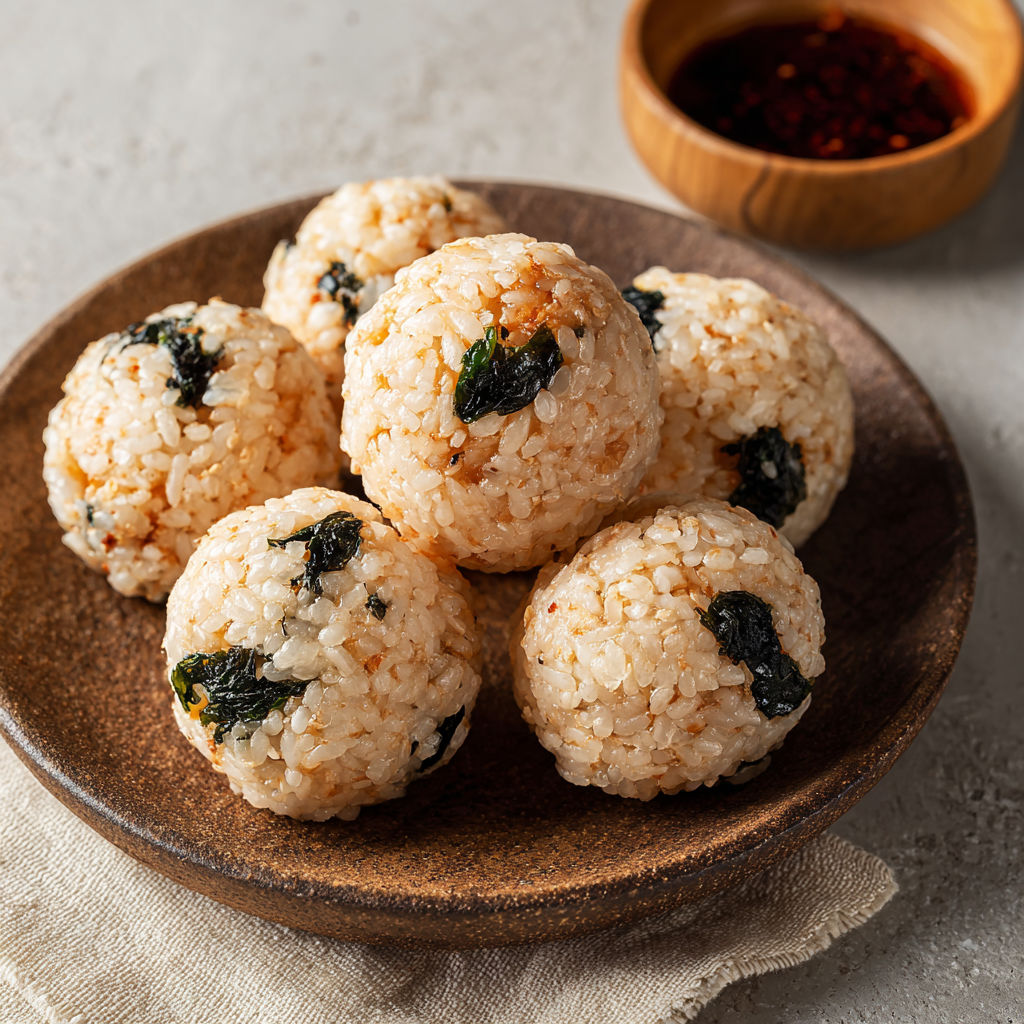
Seaweed flakes are my favorite ingredient here; they add an addictive crunch and umami that lifts the whole dish. I remember making Jumeokbap with my family on a rainy weekend and how the simple preparation brought us together for a cozy meal.
Flavor Boosters
Storage Tips Store leftover rice balls in an airtight container in the refrigerator. They will keep fresh for up to two days but are best eaten the same day or the next to enjoy the texture and flavor fully. To reheat, microwave briefly or steam to avoid drying them out. Ingredient Substitutions If you cannot find gochujang, mix a little chili paste or hot sauce with a touch of miso or soy sauce to mimic the depth. Instead of kimchi, you can use pickled vegetables or fermented cabbage for similar tang. For the seaweed flakes, crushed nori sheets or Japanese furikake seasoning work beautifully in a pinch and add slightly different but complementary flavors.
Serving Suggestions
Jumeokbap pairs wonderfully with light broths or miso soup to make a fuller meal. They are also great alongside fresh cucumber slices or a simple salad dressed with sesame oil and rice vinegar. Try dipping them in extra gochujang mixed with a little mayonnaise for a creamy spicy boost that is popular in Korean street food.
Creative Twists
Jumeokbap literally means fist rice and is a traditional Korean comfort food often made for picnics, lunchboxes, or quick meals during busy days. It showcases how simple ingredients transform into a satisfying dish that reflects Korean flavor profiles—spicy, sour, and savory balanced perfectly. In warmer months, adding fresh crunchy vegetables like sliced cucumbers or radishes inside the balls adds a refreshing twist. In colder seasons, mixing in cooked ground meat or scrambled egg boosts warmth and heartiness. Many home cooks have shared how Jumeokbap helped them use up leftover rice creatively while introducing their families to Korean flavors. It’s become a beloved recipe across different age groups, kids especially enjoy the fun handheld form. To freeze, shape the rice balls and place them on a parchment-lined tray so they do not stick to each other. Once frozen solid, transfer to a freezer-safe container or bag. Reheat gently in a microwave or steam to maintain a soft texture.
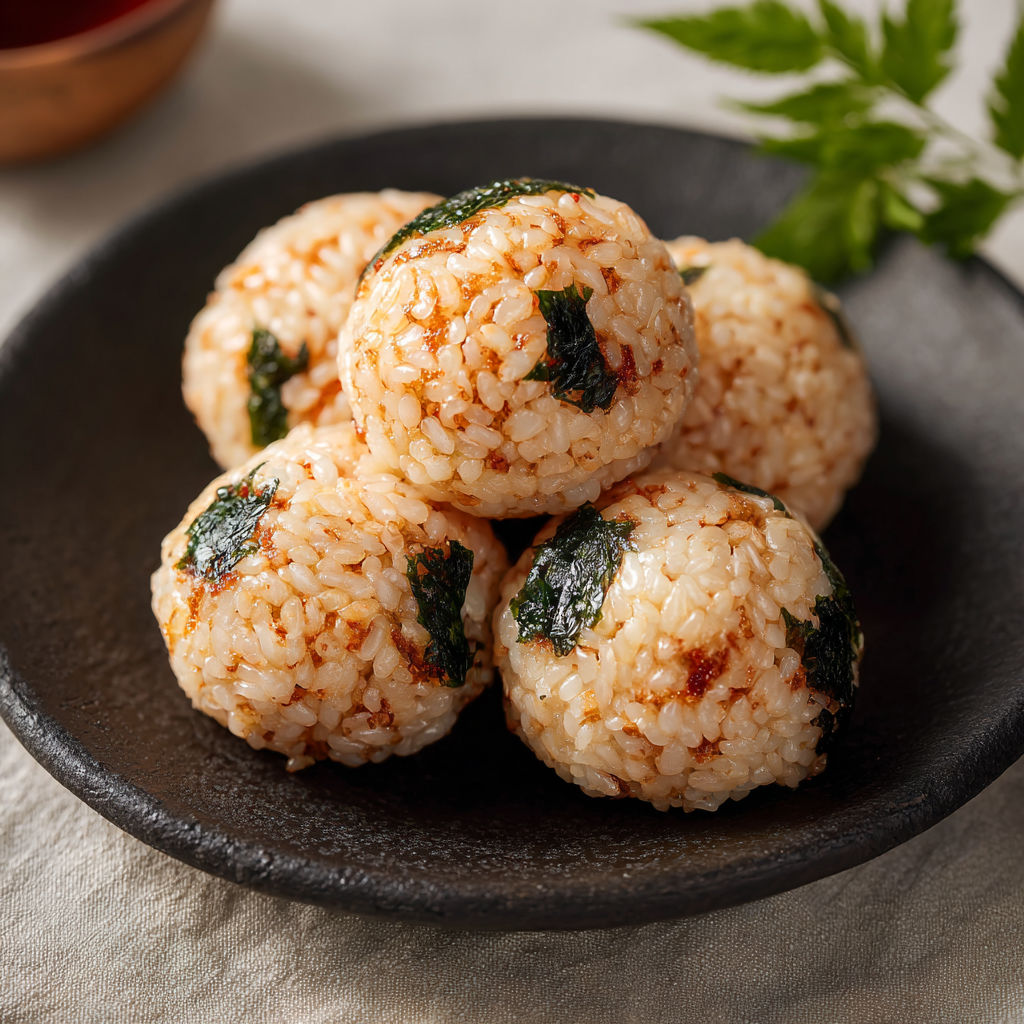
These rice balls are simple to prepare yet packed with flavor, making them perfect for any occasion.
Common Questions About This Recipe
- → What type of rice is best for Korean rice balls?
Short- or medium-grain rice is preferred because it holds together well when shaped. Avoid long-grain unless it's glutinous rice for stickiness.
- → Can I substitute the beef with another protein?
Yes, you can use minced chicken or tofu as alternatives, adjusting cooking times as needed.
- → How do seaweed flakes enhance the dish?
Seasoned seaweed flakes add a savory, slightly salty flavor and a delicate texture contrast to the rice balls.
- → Is it necessary to stir-fry the anchovies before mixing?
Stir-frying the anchovies reduces fishiness and helps them absorb the sauce, enhancing overall flavor.
- → Can these rice balls be served cold or must they be warm?
They can be enjoyed warm or at room temperature, making them versatile for meals or snacks.